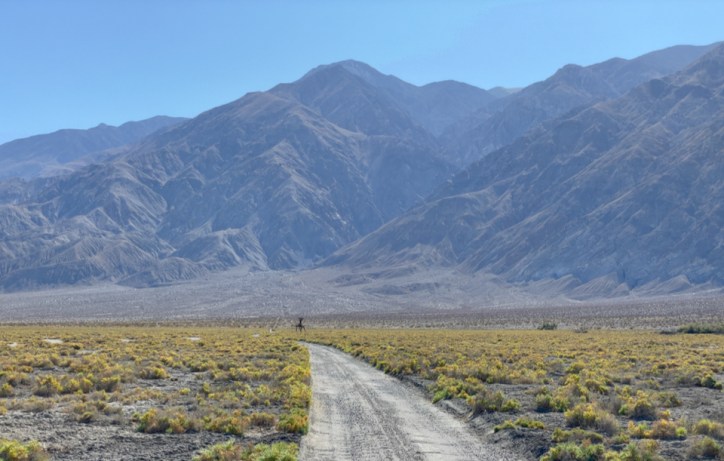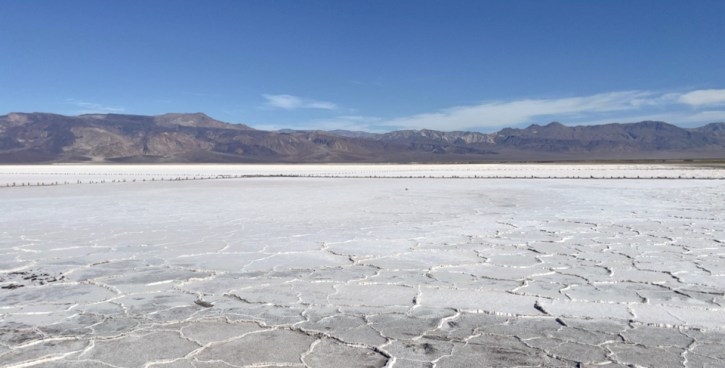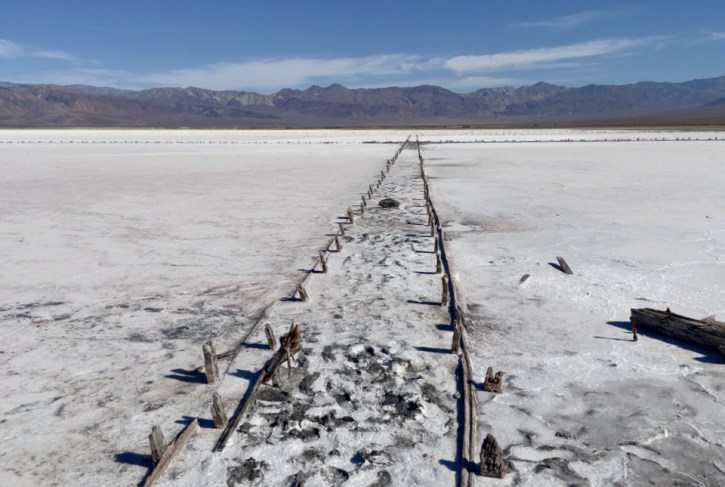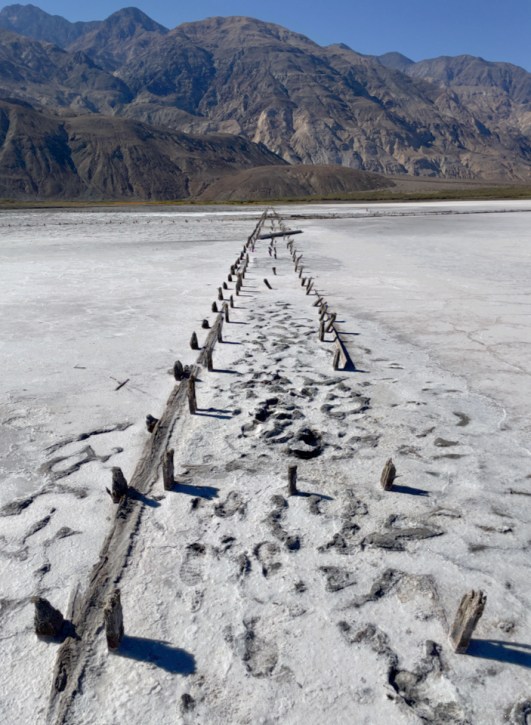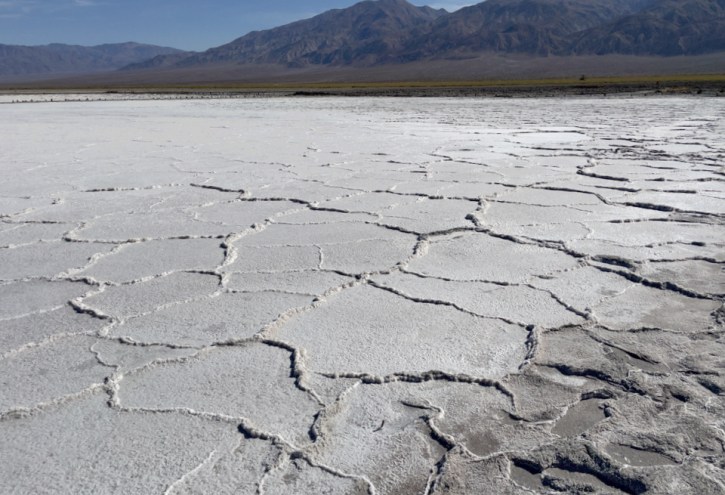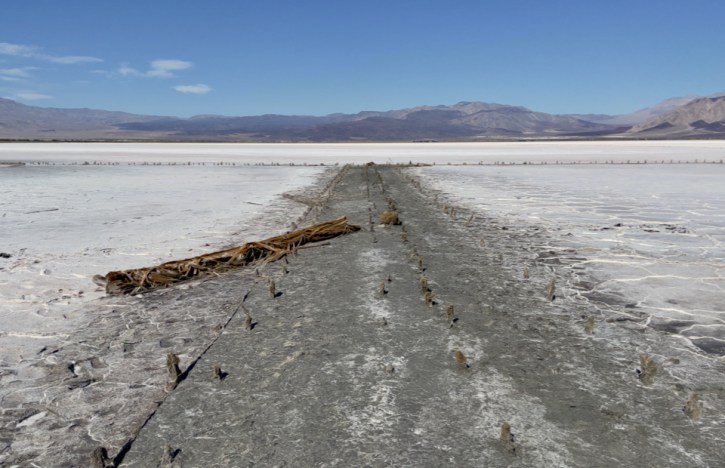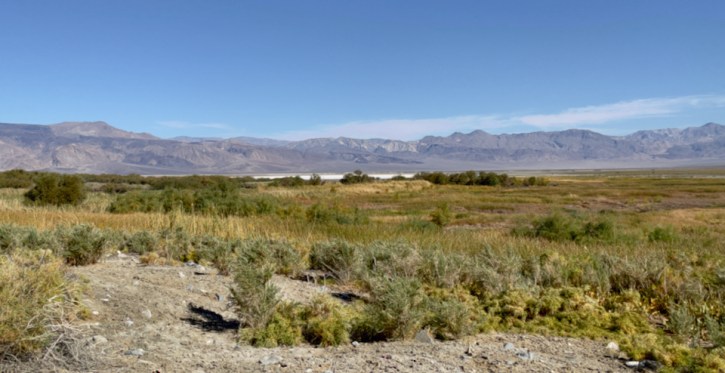
The Saline Valley Salt Works Saline Valley lies in the geological basin and range regions of the western United States desert region. It is adjacent to Death Valley and Panamint Valley. And like its neighboring valleys, it stretches almost due North-South, and contains a large dry lake bed where there is always some water. The salt lake in Saline Valley was recognized by late 19th Century prospectors as a source of sodium chloride and borax. Borax was discovered in Saline Valley in 1874. Salt was mined on a small scale some years before that date. Salt mining became a large-scale operation after 1903. The vast beds of pure grade salt in Saline Valley were passed over by miners as they rushed through the valley seeking their fortunes in the yellow ore they would eventually find in the nearby mountains
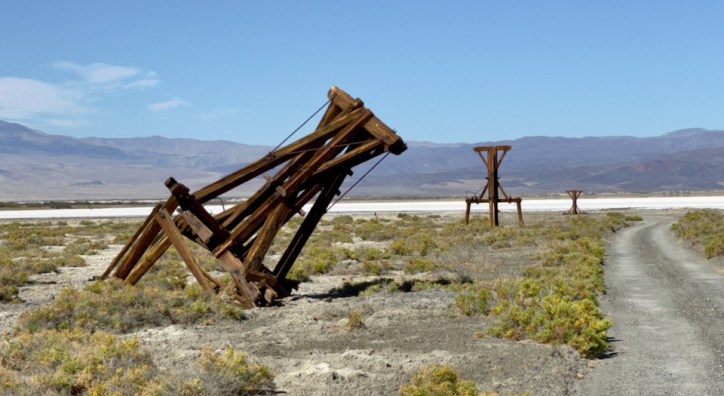
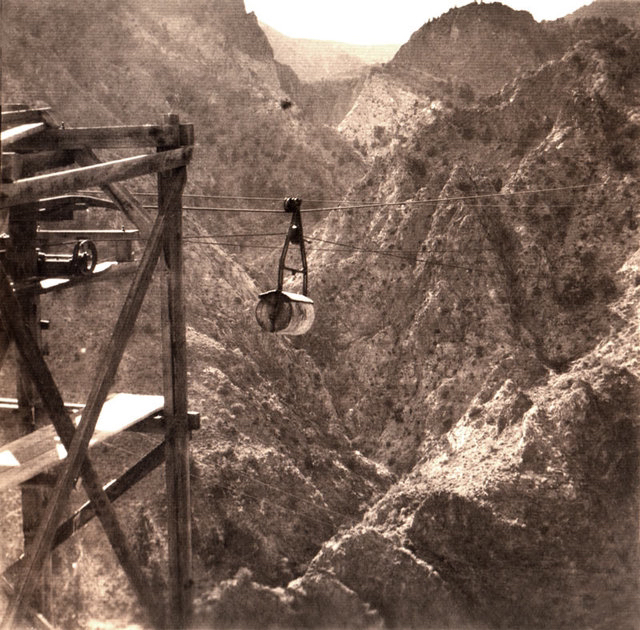
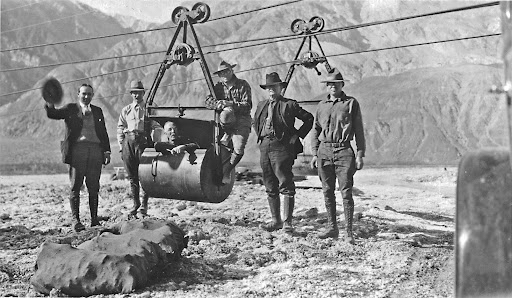
The presence of mineable salt in the Saline Valley was noticed as early as 1902, but due to its inaccessibility, it was not until 1911 that anyone successfully and seriously developed the deposit. A 16 square mile deposit 30 feet thick, consisting of a salt (sodium chloride) 98.71 percent pure, was an attractive gem on the desert floor. In August, 1911, the Trenton Iron Works received a contract from William Smith’s Saline Valley Salt Company to construct a 13 mile aerial wire-rope electric tramway. It was completed in 1913. Two hundred and sixty-eight buckets, each carrying 12 cubic feet of salt, would travel 7,600 feet from the valley floor to the top of the Inyo Mountains, and then another 5,100 feet down to Tramway, Where a 70 ton mill and employee dwellings were located.
The Owens Valley Salt Company operated the mine from 1915 to 1919 as a lessee. In 1920, G. W. Russell revived operations for a year, and after four years of inactivity, Russell formed a new company. The Sierra Salt Corporation repaired the tramway, which had fallen into disrepair after previous companies hauled the salt out by truck. In 1929 the tramway was reopened, but in the I930s, Russell ceased operations. All three companies seemed to be plagued with difficulties in making the tramway pay for itself. Although the salt was exceptionally pure, it did not demand a high enough price to offset the tremendous investment poured into the Construction and upkeep of the remarkable tramway. (Stolen from the web)
For a deeper dive into the Saline Valley and the Salt Flats click on this PDF article link:
Click on a photo below for a larger image