
My ten year old nephew Sean wanted to visit the Mt. Palomar telescope which was near where he lived. So he wrote a letter to the manager requesting a tour. To his surprise he received a response inviting him for a visit. I tagged along with his dad and my sister. We thought we would be escorted around by a museum-type docents. To our surprise this older gentlemen appeared at the door and invited us in. As it turned out, this guy wasn’t a docent, but the big guy at the telescope and a major astronomer. He had spent years working as an astronomer at Cal-Tech all around the world and was now running the telescope at Mt. Palomar. It wasn’t that we had a major scientist giving us the cook’s tour, but that he had the keys to all the really cool places that no one gets to see. So off we went. Here are the photos that the tourists don’t get to see.
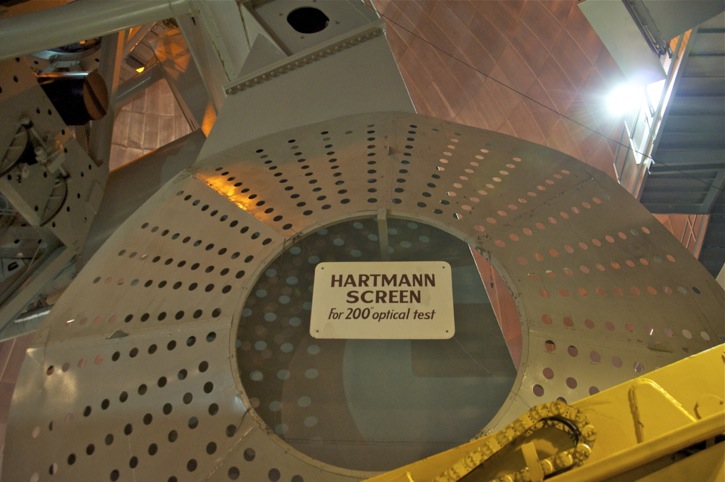 This is the device that is used to focus the mirror after it has been re-coated. It is placed over the mirror. The reflected light need to be even from every hole back into the sensors to be in focus. To focus the mirror at a particular spot on the mirror, they rub the surface with a cloth to remove a millionth of an inch of the aluminum to change the focus.

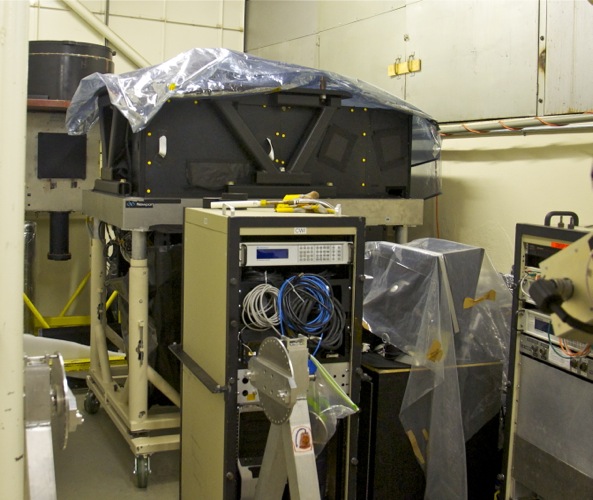
This package helps bring down the dark overlords.

This science package is a spectrum analyzer. Each of the tube looking items analyze a different spectrum of light from a given object.

Cement stand that held the mirror as it was hauled up the mountain after being fabricated back East.
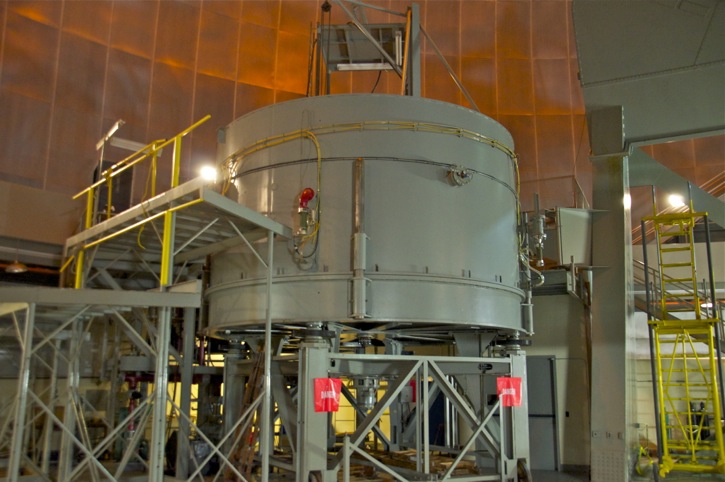
Vacuum chamber where they re-surface the mirror every few years with a thin coating of aluminum.

This is the covered mirror that opens up like the petals on a flower. Attached are the instruments packaged in blue and white boxes.

In 1939 there were no computers to keep the telescope aimed at a particular portion of the sky as the earth moved through space. The perfectly balanced telescope was moved by these gears under the cabinet controlled by the dials. It is now computer controlled with servo-motors.


Control room for the science packages.

Model of the telescope.


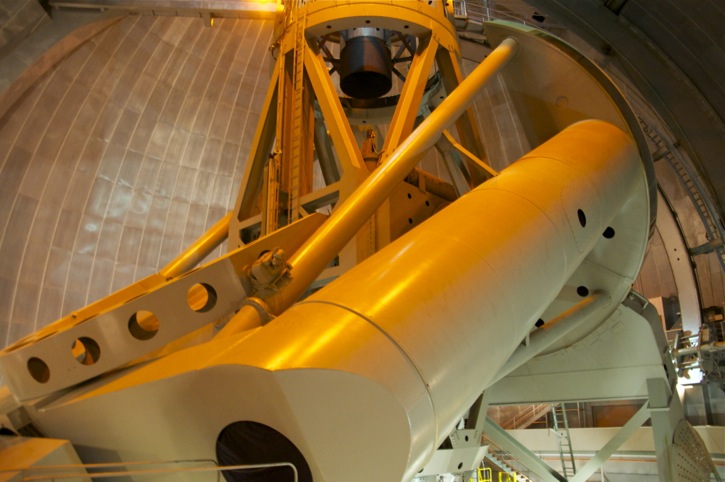 Supporting structure for the massive mirror (that was covered during our visit to protect it from dust and other contaminates.
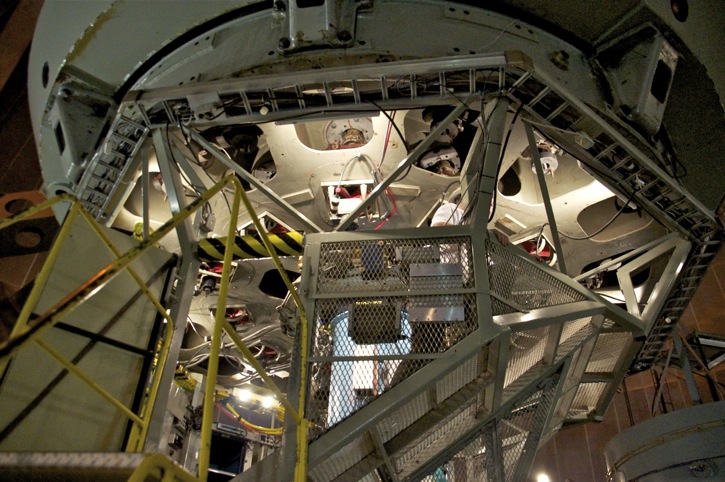 Instrument packages at the base of the telescope. This telescope is not a look-through-the-tube type scope. It uses film and instrument packages to collect the photos eminating from distant objects.

Dome up close.

Main dome of the 200 inch Hale Telescope that was built in 1936 and was the largest and most important telescope in the world until 1992.