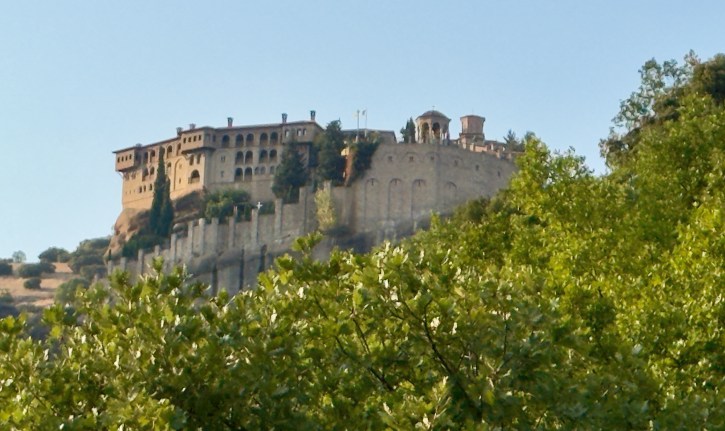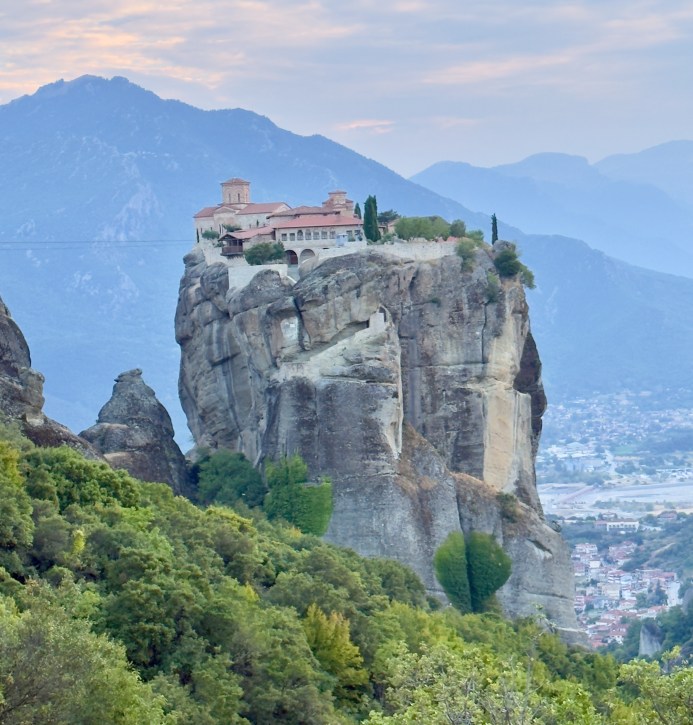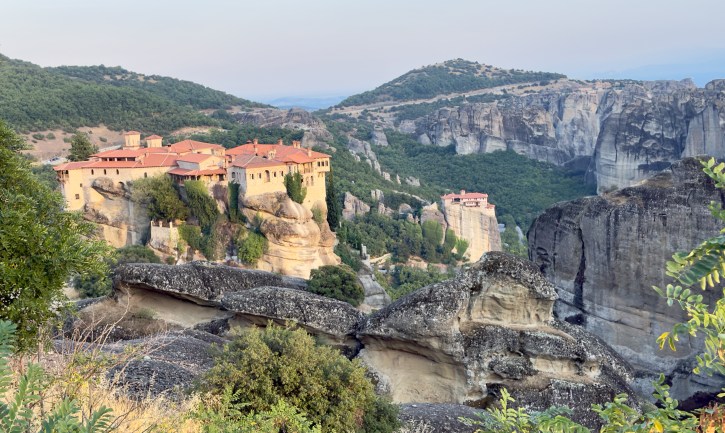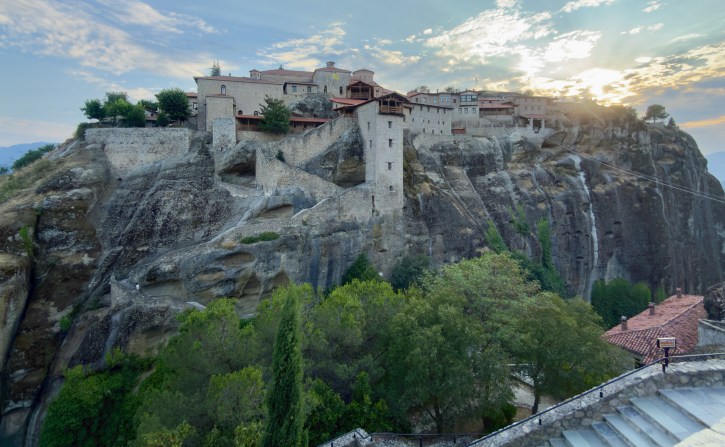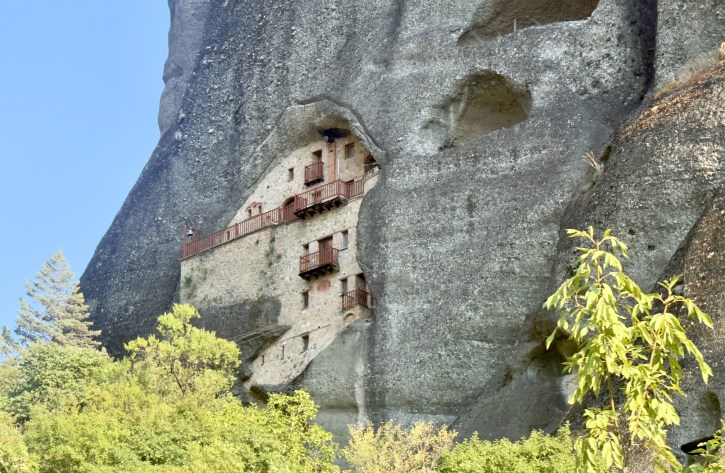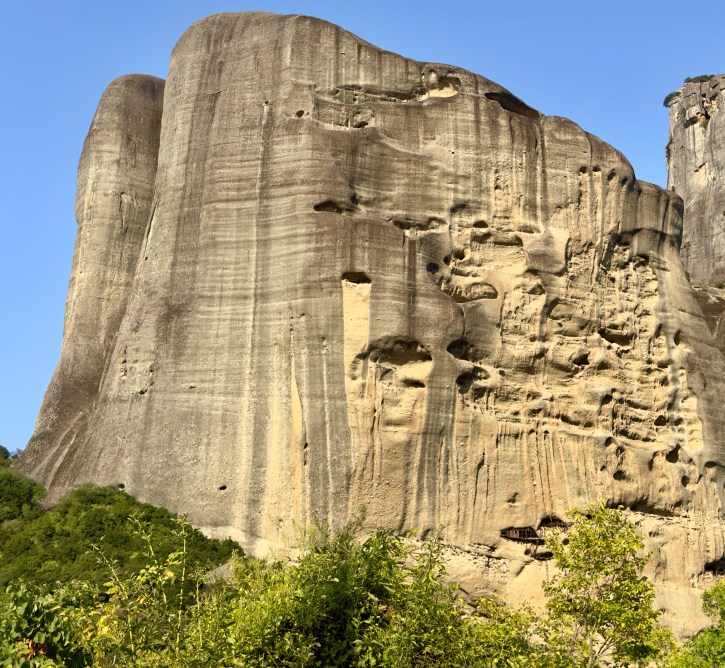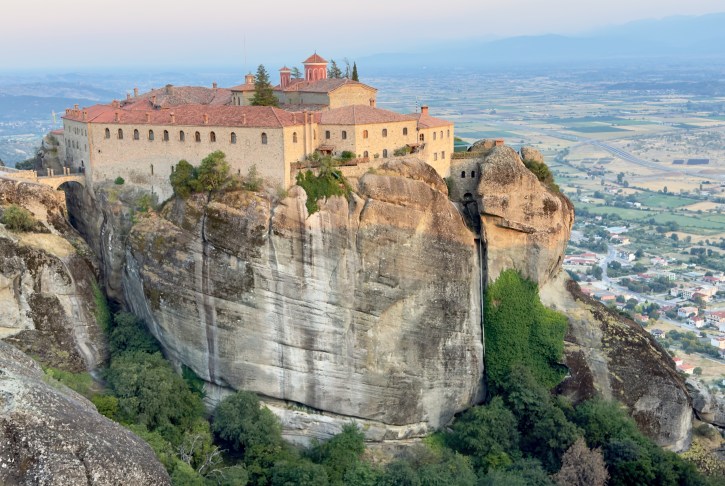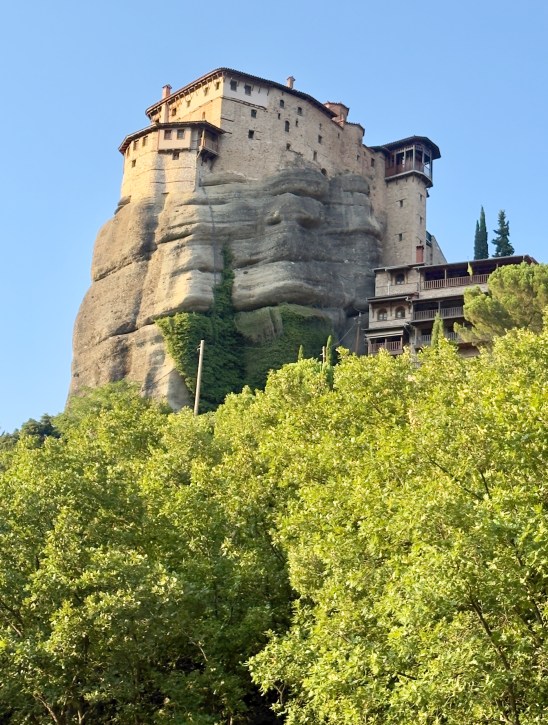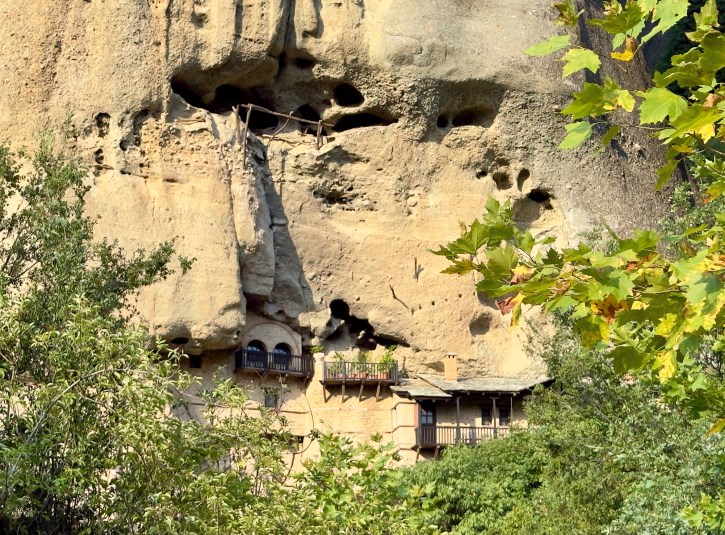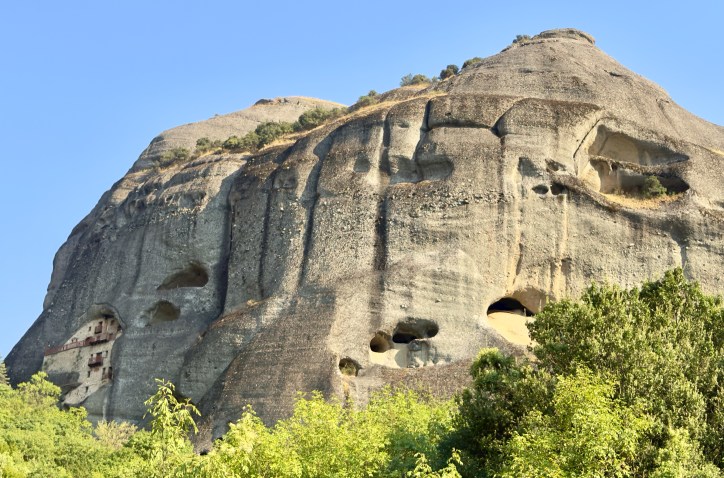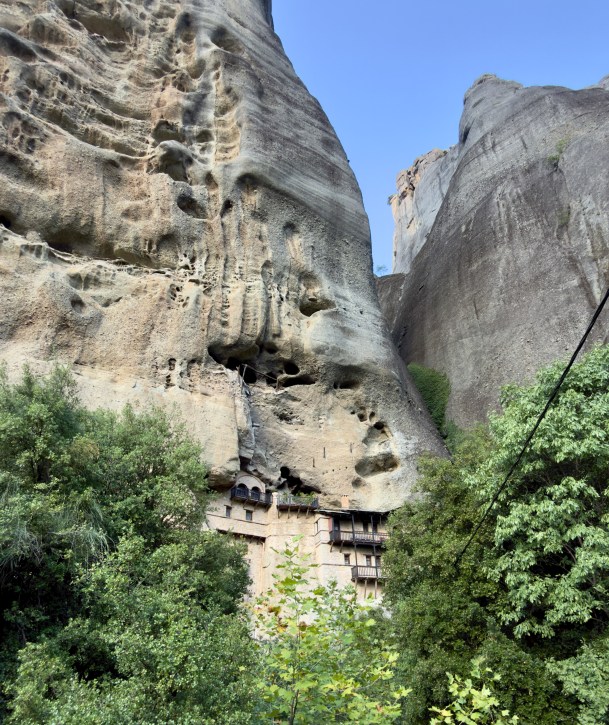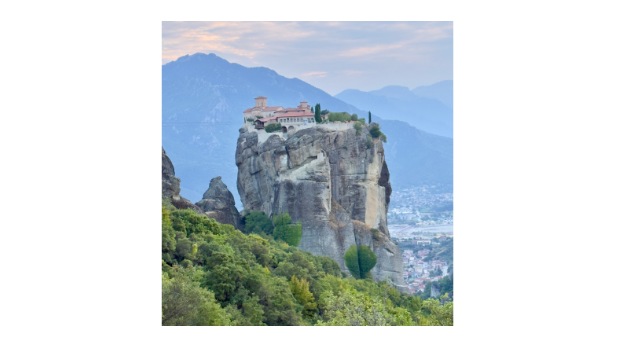
The Metéora (“suspended rocks”, “suspended in the air” or “in the heavens above”) is one of the largest and most important complex of monasteries in Greece, second only to Mount Athos. The monasteries are built on natural sandstone rock pillars. The Metéora is home to monasteries and is included on the UNESCO World Heritage List.
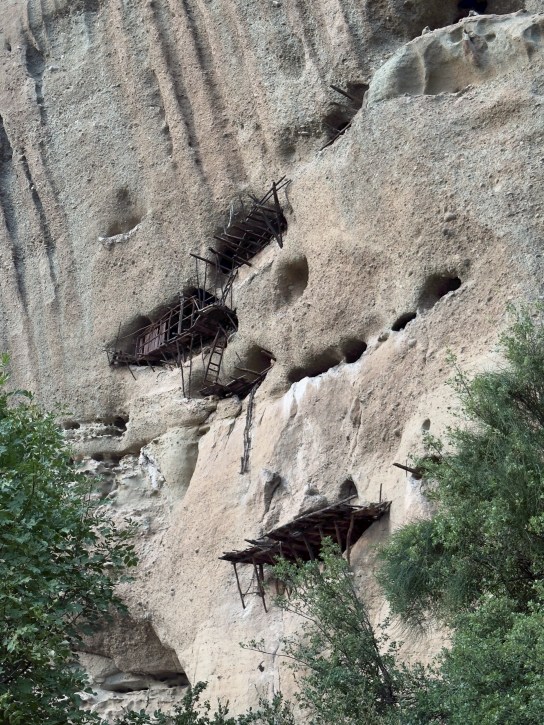
Twenty-four monasteries were established atop the giant natural pillars and hill-like rounded boulders that dominate the local area, mainly from the second half of the 14th century under the local rule of self-proclaimed Emperor of Serbs, Greeks and Albanians. Monks lived in the caves on the rock face and had all of their supplies lifted up by rope. To originally build these caves and mountain top monasteries, monks would drill holes into the limestone cliffs, insert vinegar to melt the hole larger and then insert wooden pegs on which they would attach a ladder. Eventually reaching the top they would lower a basket in which everything they needed to build these structures would be pulled up. To this day, many of these monasteries are services by cables and baskets.
As of December 2025, four of the original monasteries were occupied, in active use as monasteries that are managed baby monks and open to visitors.
Click below on a photo for a larger image