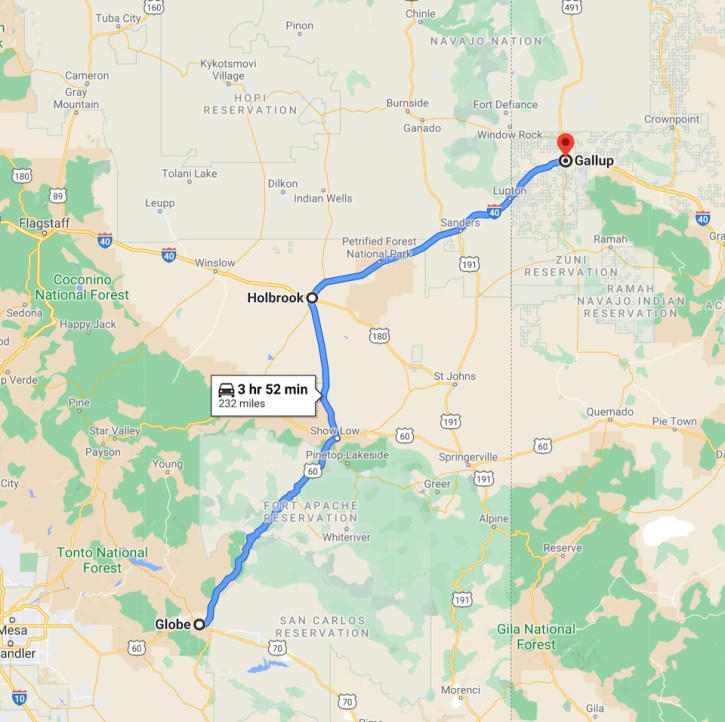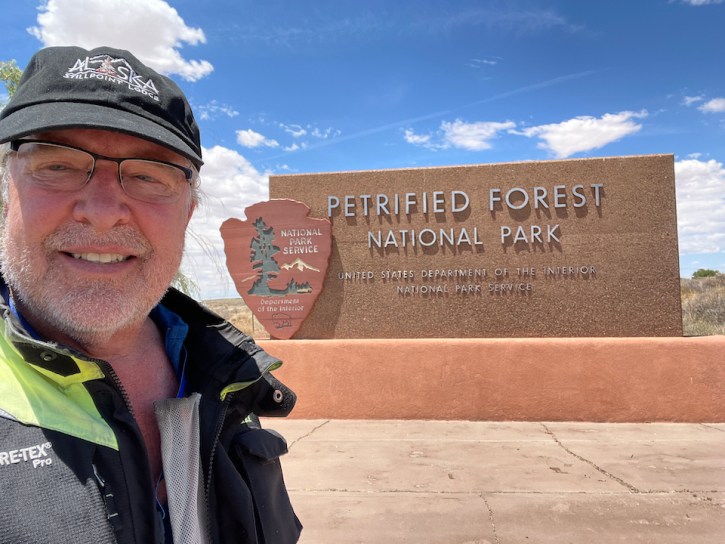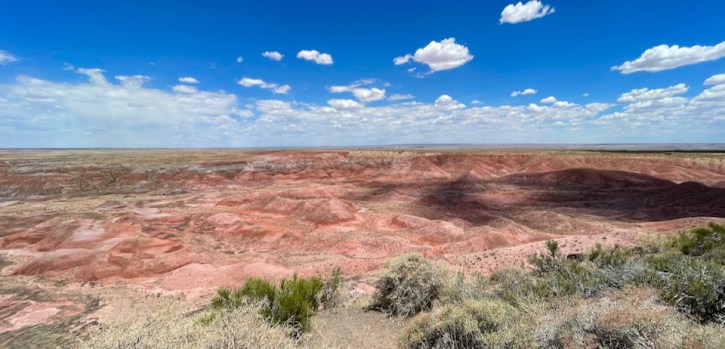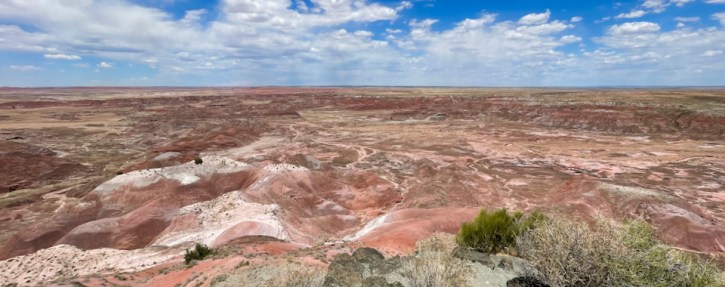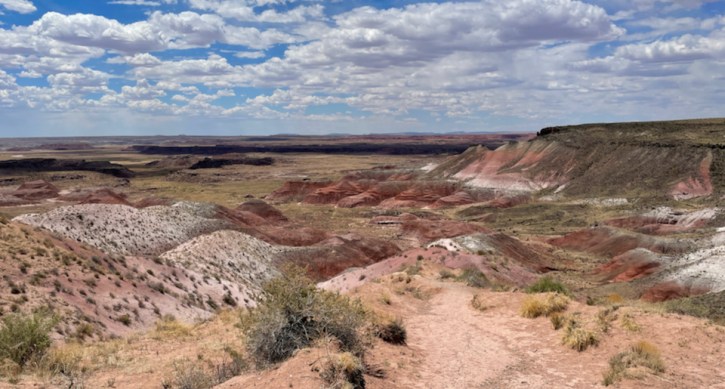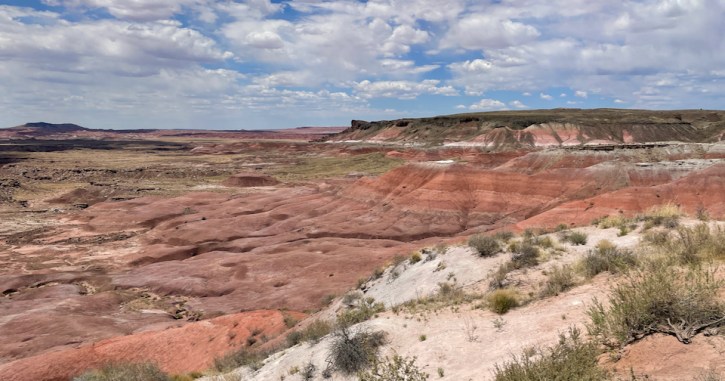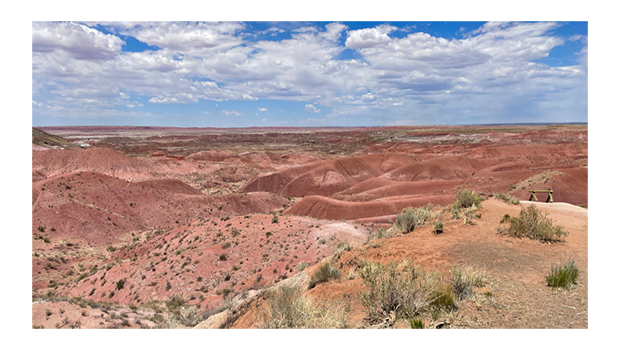
Petrified Forest National Park straddles the border between Apache County and Navajo County in northeastern Arizona. The park is about 30 miles long from north to south, and its width varies from a maximum of about 12 miles in the north to a minimum of about 1 mile along a narrow corridor between the north and south, where the park widens again to about 4 to 5 miles.
Petrified Forest National Park is known for its fossils, especially of fallen trees that lived in the Late Triassic Epoch of the Mesozoic era, about 225 million years ago. During this period, the region that is now the park was near the equator on the southwestern edge of the supercontinent Pangaea, and its climate was humid and sub-tropical. What later became northeastern Arizona was a low plain flanked by mountains to the south and southeast and a sea to the west. Streams flowing across the plain from the highlands deposited inorganic sediment and organic matter, including trees as well as other plants and animals that had entered or fallen into the water. Although most organic matter decays rapidly or is eaten by other organisms, some is buried so quickly that it remains intact and may become fossilized. Within the park, the sediments containing the fossil logs for which the park is named are part of the Chinle Formation.
More than 1200 archeological sites have been found inside the boundaries of Petrified Forest National Park. Evidence suggests that the earliest inhabitants of the park arrived over 12,000 years ago. Clovis and Folsom-type spear points made from Petrified wood are among the earliest artifacts of Paleoindians found in the park. Between 8,000 BCE and 1,000 BCE, the Archaic Period, nomadic groups established seasonal camps in the Petrified Forest from which they hunted game such as rabbits, pronghorn antelope, and deer and harvested seeds from Indian ricegrass and other wild plants. By at least 1000 BCE and through the Basketmaker II period (400 BCE – CE 500) Basketmaker II Ancestral Puebloan farmers began to grow corn. Between 200-500 CE population size grew rapidly. Many families built houses in the Petrified Forest and for the first time began to stay there year-round. (Stolen from the web)