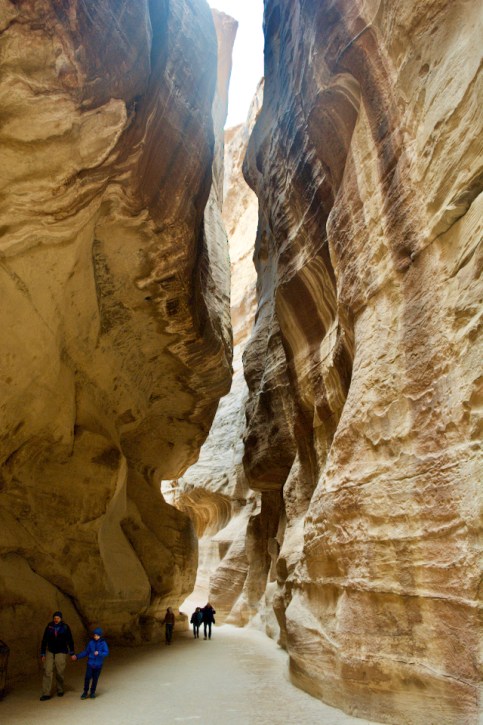
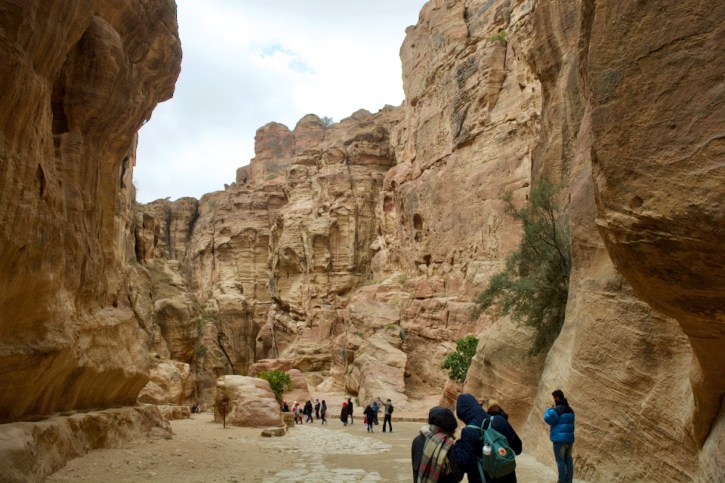
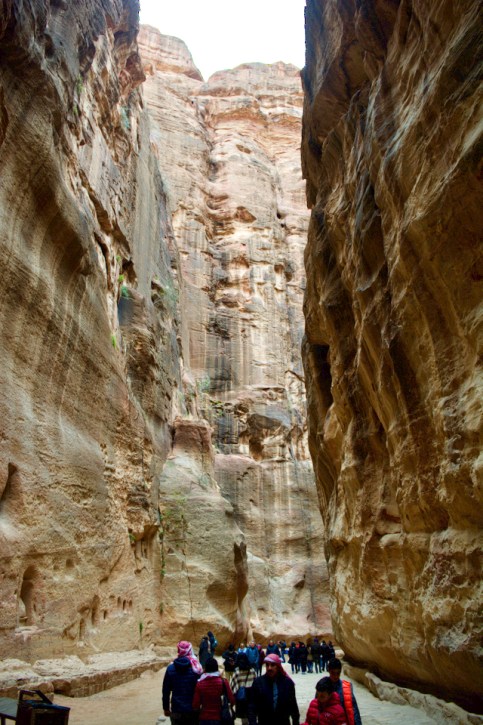
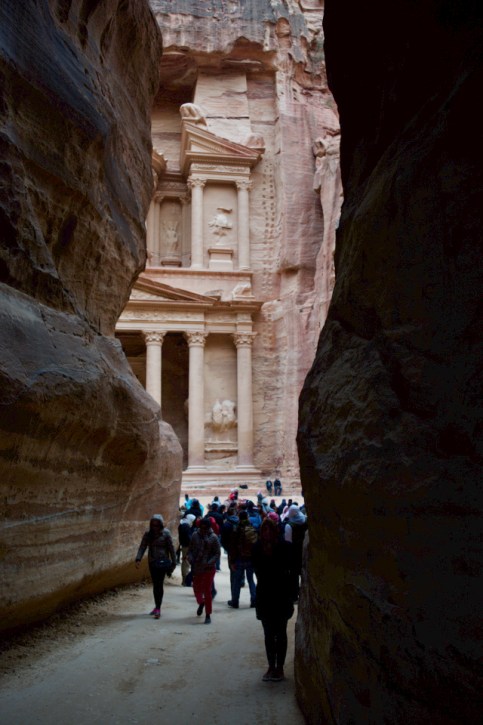
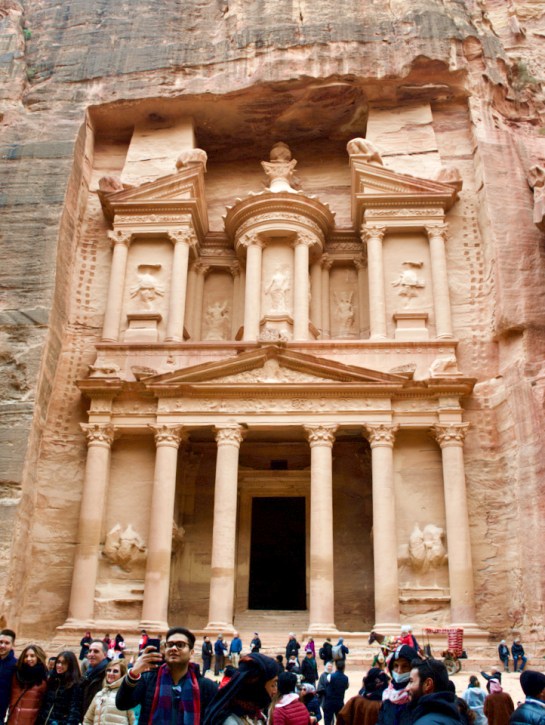
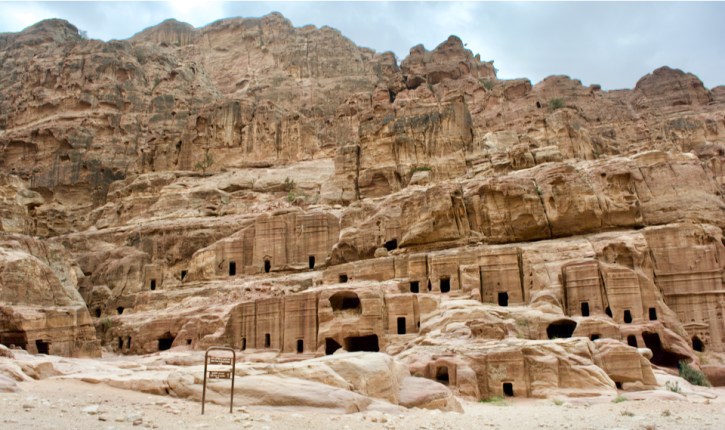
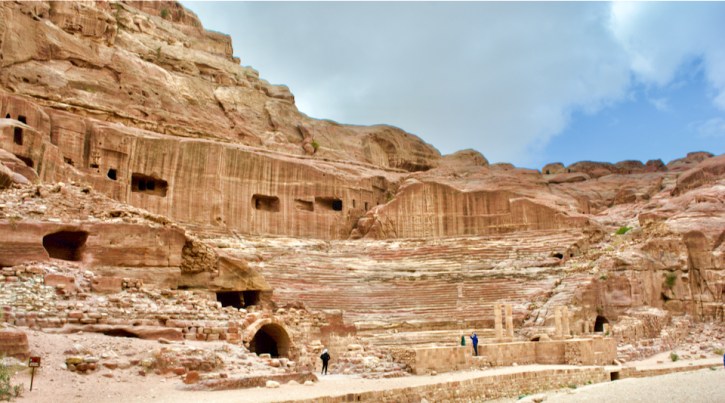
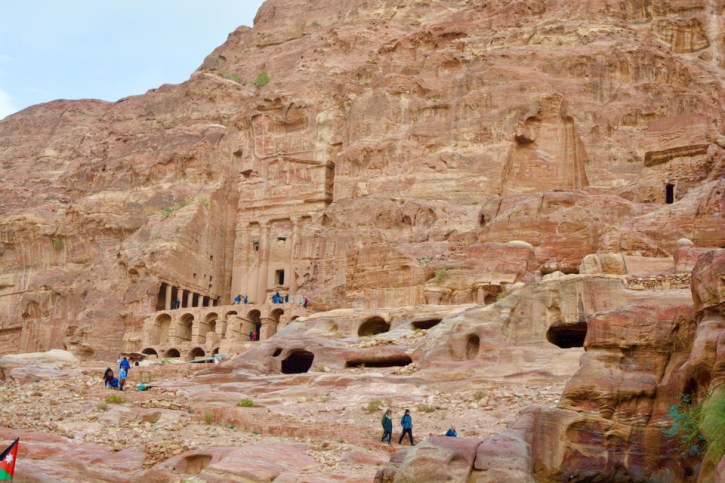
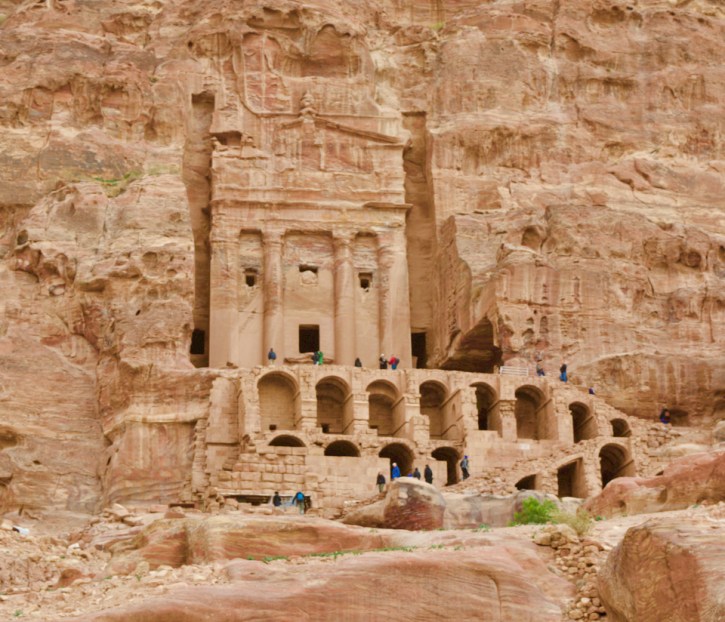
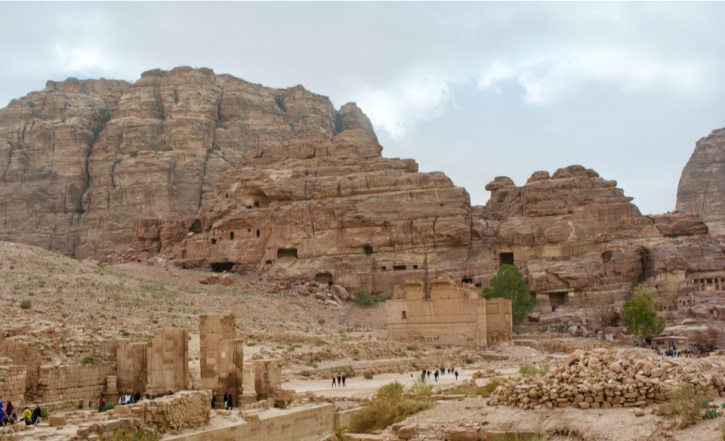
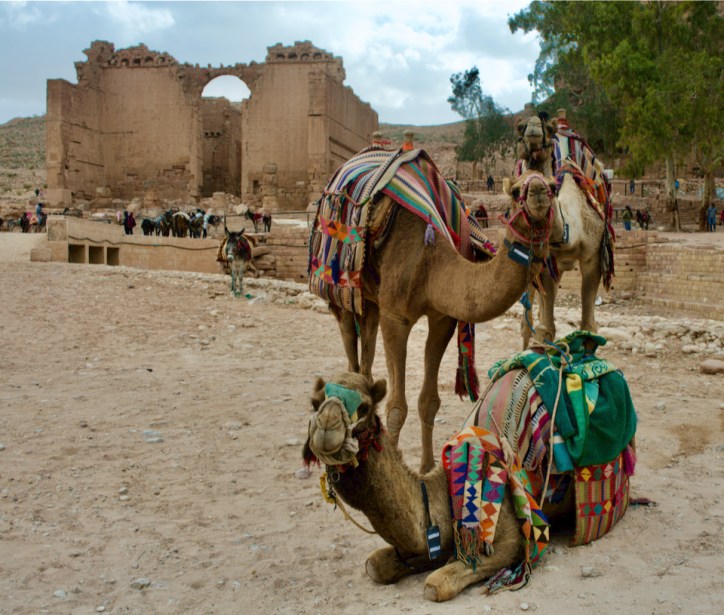
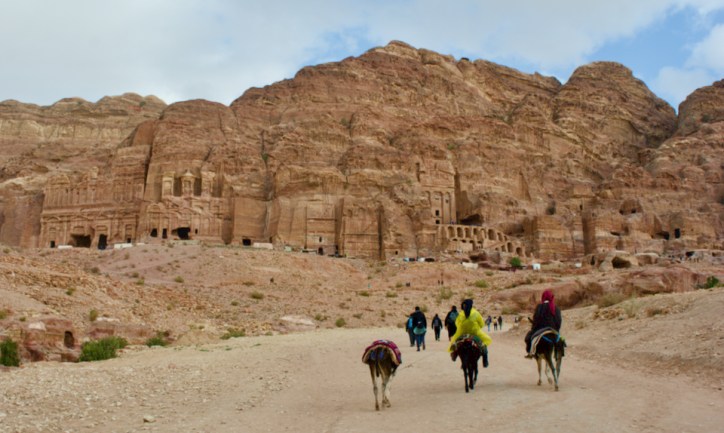
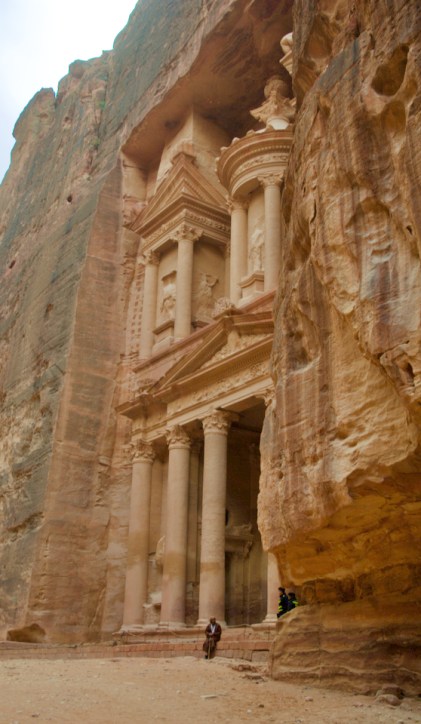
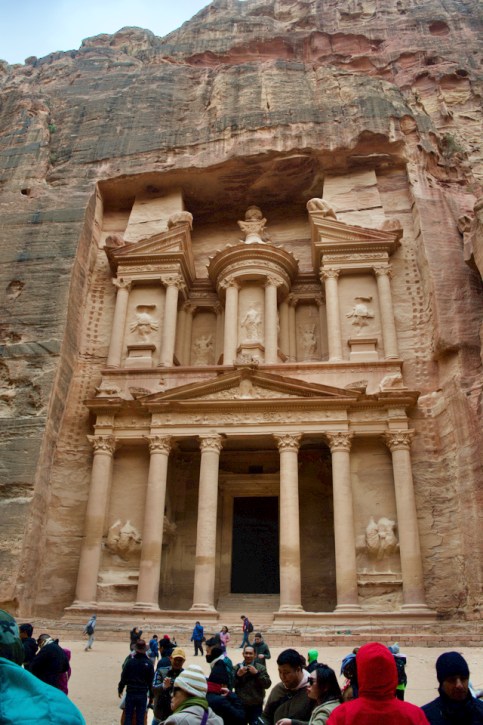
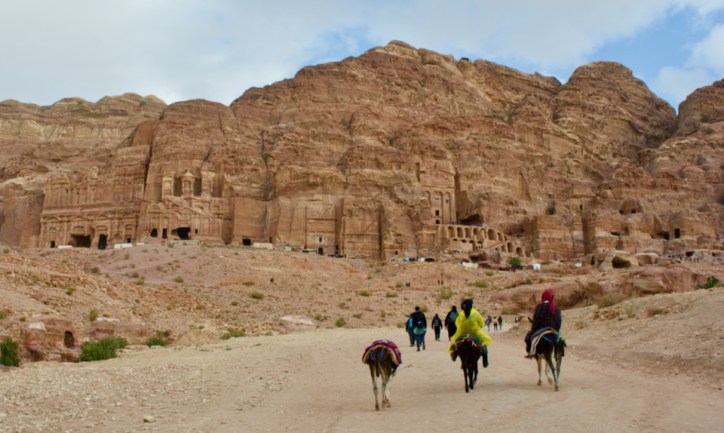
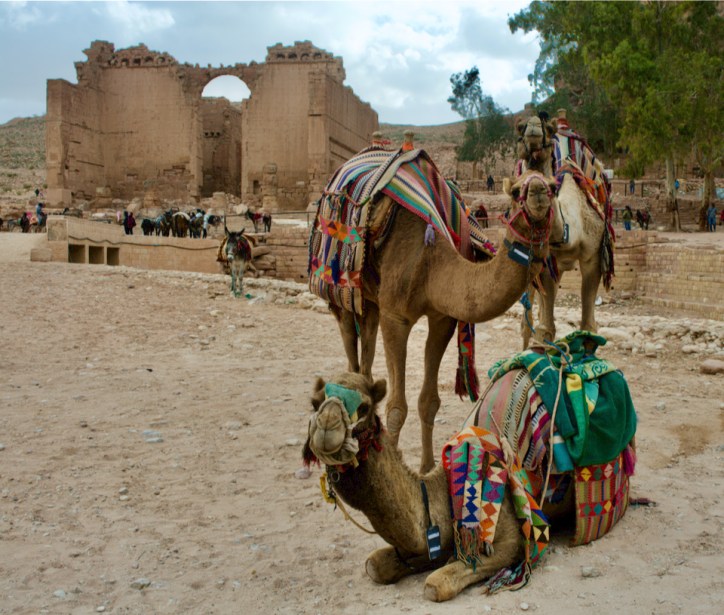
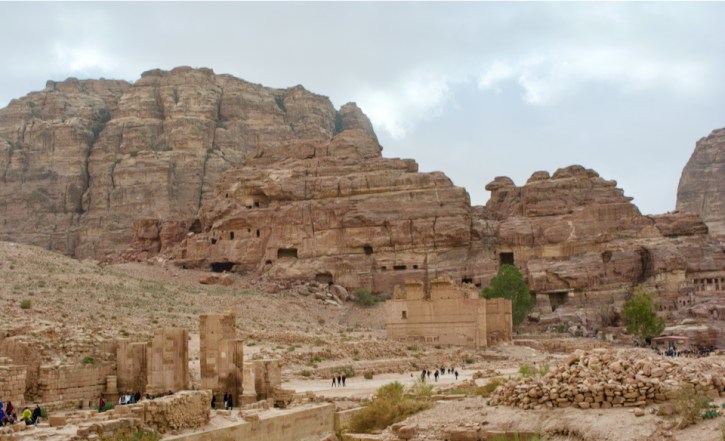
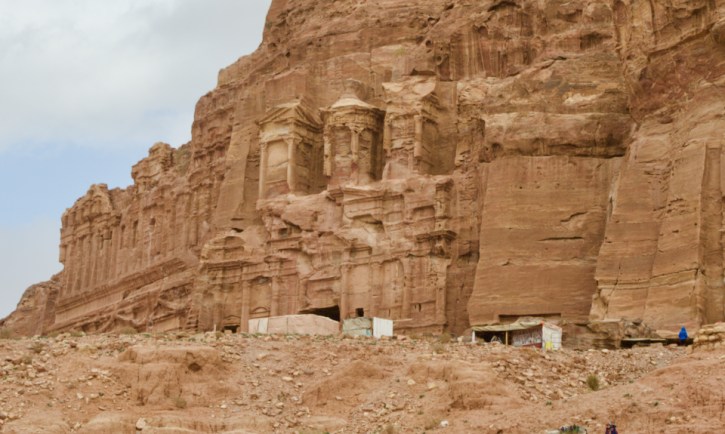
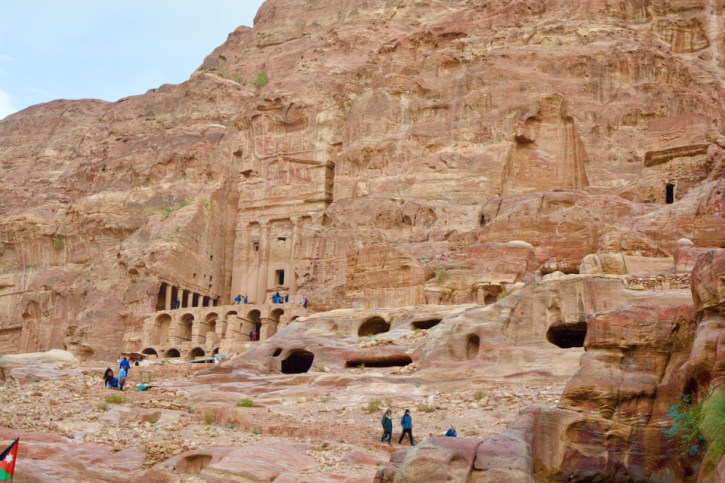
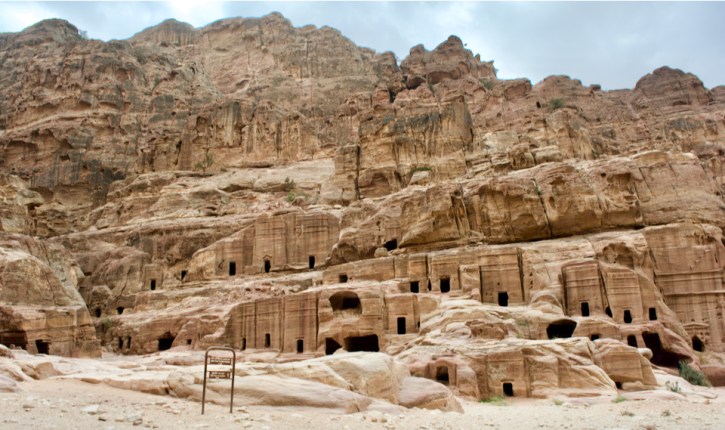
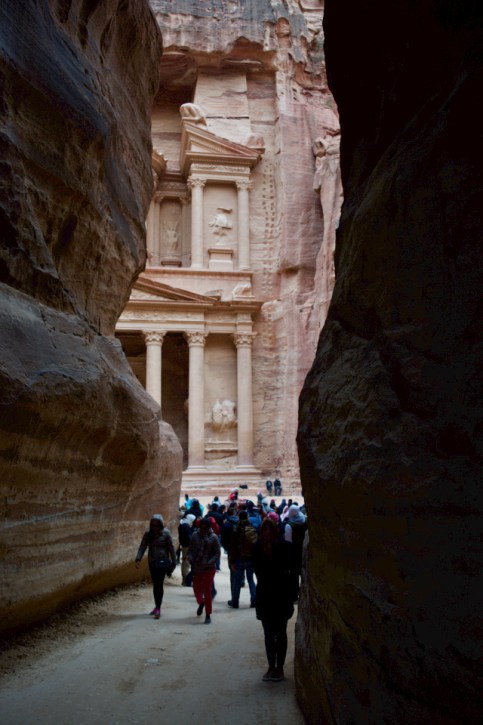
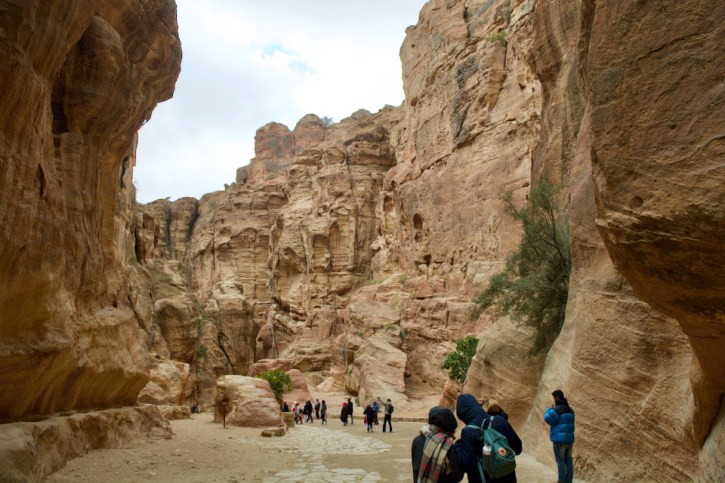
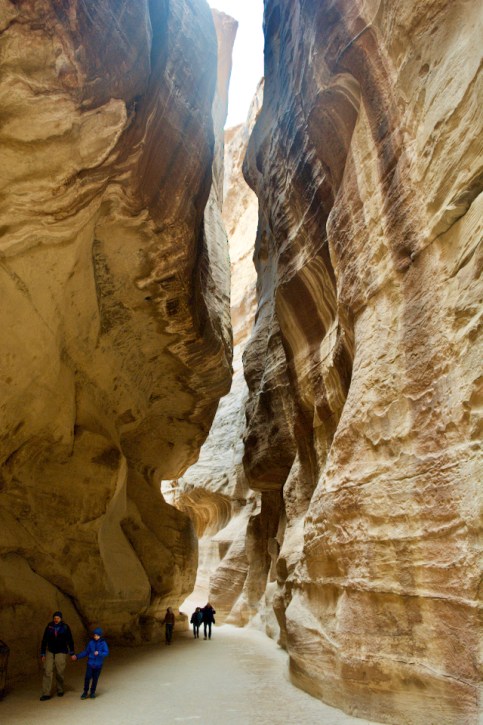
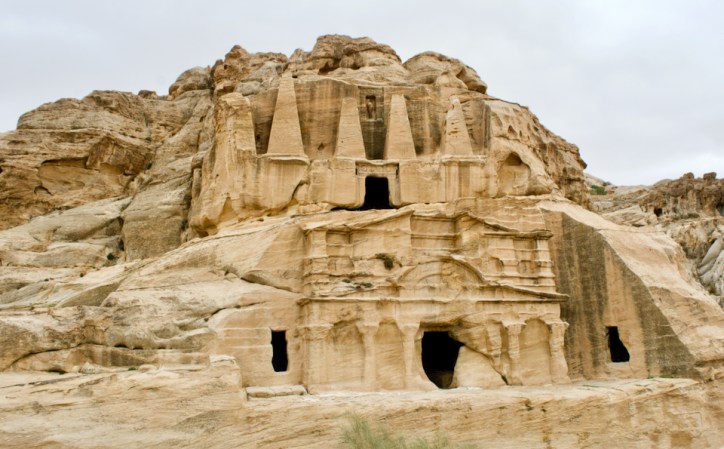
Petra is a historical and archaeological city in southern Jordan. The area around Petra has been inhabited from as early as 7000 BC, by the Nabataeans as early as the 4th century BC. The Nabataeans were nomadic Arabs who invested in Petra’s proximity to the trade routes by establishing it as a major regional trading hub. The trading business gained the Nabataeans considerable revenue and Petra became the focus of their wealth. The Nabataeans were accustomed to living in the barren deserts, unlike their enemies, and were able to repel attacks by taking advantage of the area’s mountainous terrain. They were particularly skillful in harvesting rainwater, agriculture and stone carving. Petra flourished in the 1st century AD, when its famous Al-Khazneh structure – believed to be the mausoleum of Nabataean king Aretas IV – was constructed, and its population peaked at an estimated 20,000 inhabitants.